
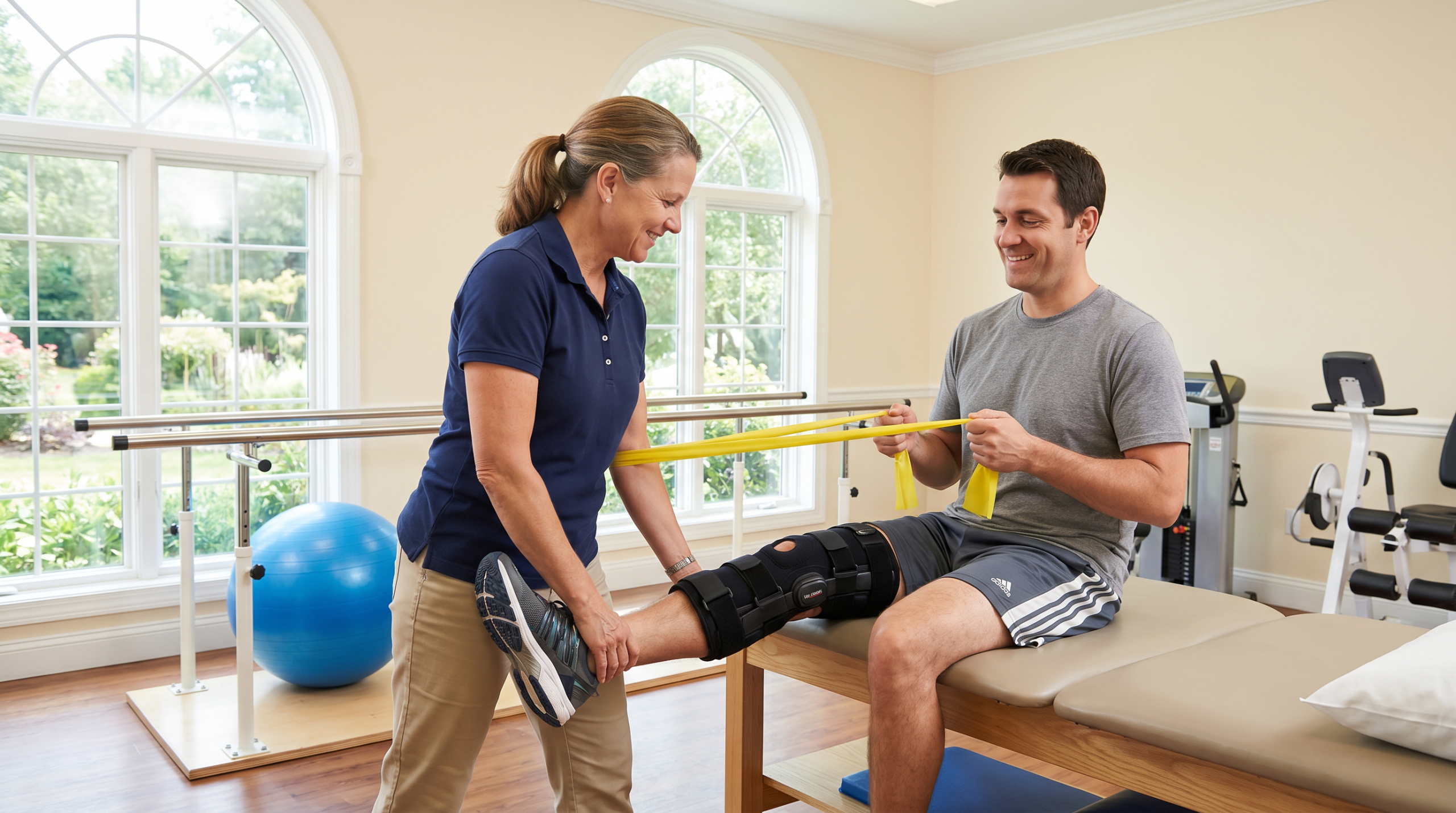
Undergoing a total knee replacement (TKA) is a major step toward reclaiming your mobility and living a pain-free life. However, the surgery itself is only the first part of the journey. The true key to a successful outcome lies in the quality and consistency of your postoperative care. For patients seeking knee replacement rehab Lawrenceville GA, understanding the recovery timeline and the critical role of physical therapy can make all the difference. At Onesource Sports Neuro Rehab, our expert physical therapists are dedicated to guiding you through every phase of your recovery, ensuring you regain strength, flexibility, and confidence.
Whether you are preparing for an upcoming surgery or have recently returned home from the hospital, having a structured rehabilitation plan is essential. We proudly serve patients across multiple locations in Georgia, including Lawrenceville, Snellville, Tucker, Newnan, Loganville, and Atlanta, providing comprehensive, evidence-based care tailored to your specific needs.
The Importance of Early Physical Therapy
One of the most significant advancements in orthopedic rehabilitation is the shift toward early mobilization. Clinical guidelines strongly recommend that physical therapy should begin within 24 hours of surgery, often while the patient is still in the hospital. This early intervention is crucial for preventing complications such as blood clots and joint stiffness, while also setting the foundation for long-term functional recovery.
A comprehensive 2025 systematic review published in Musculoskeletal Care analyzed the impact of early physiotherapy on patients recovering from total knee arthroplasty. The researchers found that initiating physical therapy early significantly improves pain relief, increases the knee’s range of motion (ROM), and enhances the patient’s overall quality of life. The study highlighted that interventions focusing on early mobilization and structured strengthening programs yielded statistically significant improvements in clinical outcomes compared to delayed therapy.1
Furthermore, the American Physical Therapy Association (APTA) Clinical Practice Guidelines emphasize the necessity of high-intensity strength training and motor function training—such as balance and walking exercises—during the early postacute period. These evidence-based practices are designed to counteract the rapid muscle atrophy that occurs following surgery and to restore movement symmetry.2
Understanding the Recovery Timeline
Recovery from a total knee replacement is a gradual process that requires patience and dedication. While every patient’s journey is unique, the rehabilitation timeline generally follows a predictable progression of milestones.
Weeks 1 to 2: Early Healing and Mobility
During the first two weeks, the primary goals are managing pain and swelling, protecting the surgical incision, and achieving basic mobility. Physical therapy focuses on gentle range-of-motion exercises, such as heel slides and ankle pumps, to prevent stiffness. Patients will learn how to safely transfer in and out of bed and walk using an assistive device, such as a walker or cane. Cryotherapy (cold therapy) is frequently utilized during this phase to effectively manage early postoperative pain.2
Weeks 3 to 6: Building Strength and Independence
As the initial swelling subsides, the focus shifts toward progressive strengthening and improving gait mechanics. Research indicates that quadriceps strength can decrease by approximately 30.7% immediately after surgery and remain 50% to 60% weaker after one month if not properly rehabilitated.3 To combat this, physical therapists introduce more challenging exercises, including mini-squats, step-ups, and stationary cycling. Neuromuscular electrical stimulation (NMES) may also be employed to actively recruit and strengthen the quadriceps muscles. By the end of this phase, many patients can transition from a walker to a cane, or walk independently.
Weeks 7 to 12: Advanced Function and Return to Activity
During the late recovery phase, rehabilitation emphasizes advanced strengthening, balance training, and functional exercises that mimic daily activities. The goal is to restore full range of motion and ensure the patient can confidently navigate stairs, uneven terrain, and longer walking distances. While significant progress is made during this time, it is important to note that full recovery and maximal strength gains can take up to a full year. Consistent adherence to a prescribed home exercise program, combined with supervised outpatient therapy, is vital for achieving the best possible long-term results.
Supervised Outpatient Therapy vs. Home Exercise
While performing exercises at home is a necessary component of recovery, relying solely on unsupervised home programs may not yield optimal results for everyone. A 2025 quasi-experimental study published in PeerJ compared the effectiveness of supervised exercise programs versus home-based exercise programs for knee rehabilitation. The findings revealed that patients participating in supervised exercise groups demonstrated superior outcomes in pain reduction, knee flexion range of motion, and overall functional status compared to those who only exercised at home.4
At Onesource Sports Neuro Rehab, our supervised outpatient programs provide several distinct advantages. Our physical therapists continuously monitor your progress, ensuring that exercises are performed with the correct technique to prevent injury. We also have the ability to dynamically adjust the intensity of your program based on your real-time physiological response, which is critical for safely pushing past recovery plateaus.
Comparing Rehabilitation Approaches
To better understand the value of structured, supervised physical therapy following a knee replacement, consider the comparison table below, which outlines the differences between comprehensive outpatient care and standard home-based recovery.
| Feature | Supervised Outpatient Physical Therapy | Unsupervised Home Exercise Program |
|---|---|---|
| Professional Guidance | Continuous monitoring and technique correction by a licensed physical therapist | Self-directed; higher risk of improper form or compensatory movements |
| Program Progression | Dynamic adjustments based on real-time functional tolerance and healing milestones | Static routine that may not challenge the patient enough to maximize strength gains |
| Access to Modalities | Utilization of advanced tools like NMES, aquatic therapy, and specialized equipment | Limited to basic household items and bodyweight exercises |
| Clinical Outcomes | Superior pain reduction, greater range of motion, and higher functional scores | Adequate for basic recovery, but may result in lingering strength deficits |
Find Relief in Lawrenceville, Snellville, and Beyond
Recovering from a total knee replacement is a significant undertaking, but you do not have to navigate it alone. At Onesource Sports Neuro Rehab, our dedicated team is committed to providing the highest standard of care to help you achieve a full and active recovery. We proudly serve communities across Georgia, including Lawrenceville, Snellville, Tucker, Newnan, Loganville, and Atlanta.
If you are preparing for knee surgery or are currently in the recovery process, contact Onesource Sports Neuro Rehab today to schedule an evaluation. Let us help you build a customized rehabilitation plan that gets you back on your feet and back to doing the things you love.
References
- Aftab, S., Ali, H. N., Saeed, B., Sarwar, S., Dawood, M. H., & Pervez, M. (2025). Early Physiotherapy for Post-Total Knee Arthroplasty Recovery: A Systematic Review of Randomized Controlled Trials on Quality of Life, Pain, and Range of Motion Outcomes. Musculoskeletal Care, 23(3), e70158. https://doi.org/10.1002/msc.70158
- Jette, D. U., Hunter, S. J., Burkett, L., Langham, B., Logerstedt, D. S., Piuzzi, N. S., Poirier, N. M., Radach, L. J. L., Ritter, J. E., Scalzitti, D. A., Stevens-Lapsley, J. E., Tompkins, J., & Zeni, J., Jr. (2020). Physical Therapist Management of Total Knee Arthroplasty. Physical Therapy, 100(9), 1603-1631. https://doi.org/10.1093/ptj/pzaa099
- Dutta, S., Ambade, R., Wankhade, D., & Agrawal, P. (2024). Rehabilitation Techniques Before and After Total Knee Arthroplasty for a Better Quality of Life. Cureus, 16(2), e54877. https://doi.org/10.7759/cureus.54877
- Safdar, G., Kiyani, M. M., Saleem, S. A., Qureshi, W. I., Bashir, S., Abualait, T., Khan, H., & Sajjad, A. G. (2025). Comparison of supervised versus home-based exercise programs following platelet-rich plasma injections in knee osteoarthritis: clinical outcomes from quasi-experimental study. PeerJ, 13, e19971. https://doi.org/10.7717/peerj.19971