
If you have ever felt like the room is spinning, struggled to walk in a straight line, or experienced a sudden wave of dizziness when changing positions, you are not alone. According to the Vestibular Disorders Association, as many as 35% of adults aged 40 years or older in the United States—approximately 69 million Americans—have experienced some form of vestibular dysfunction. These symptoms can be disorienting, frightening, and significantly impact your quality of life. However, there is a highly effective, non-invasive solution: Vestibular Rehabilitation Therapy (VRT).
At Onesource Sports Neuro Rehab, we specialize in helping patients across Georgia—including Lawrenceville, Tucker, Snellville, Newnan, Loganville, and Atlanta—regain their balance and confidence through targeted neurological rehabilitation. In this comprehensive guide, we will explore what the vestibular system is, common disorders that affect it, and how specialized physical therapy can help you get back on your feet.
Understanding Your Vestibular System
To understand why you feel dizzy, it helps to know how your body maintains its balance. Your sense of equilibrium relies on a complex communication network between your brain, your eyes, your sensory nerves (in your skin, muscles, and joints), and your inner ear. The inner ear houses the vestibular system, a delicate structure made up of fluid-filled semicircular canals and otolith organs. These tiny organs act like an internal gyroscope, constantly sending signals to your brain about your head’s position and movement relative to gravity.
When illness, injury, or aging damages this system or disrupts the signals it sends to the brain, the result is a sensory conflict. Your eyes might tell your brain you are standing still, but your inner ear might signal that you are moving. This mismatch is what causes the sensation of vertigo, dizziness, and imbalance.
Common Vestibular Disorders We Treat
Vestibular dysfunction can stem from a variety of causes, ranging from viral infections to head trauma. Some of the most common conditions that benefit from vestibular rehabilitation include:
- Benign Paroxysmal Positional Vertigo (BPPV): The most common cause of vertigo, BPPV occurs when tiny calcium crystals in the inner ear become dislodged and float into the semicircular canals. This causes brief, intense episodes of dizziness triggered by specific head movements, such as rolling over in bed or looking up.
- Vestibular Neuritis and Labyrinthitis: Often caused by a viral infection, these conditions involve inflammation of the inner ear or the nerves connecting the inner ear to the brain, leading to sudden, severe vertigo, nausea, and sometimes hearing loss.
- Ménière’s Disease: A chronic condition characterized by episodes of vertigo, ringing in the ears (tinnitus), a feeling of fullness in the ear, and fluctuating hearing loss.
- Post-Concussion Syndrome: Following a head injury or concussion, many patients experience lingering dizziness and balance issues due to trauma to the vestibular pathways.
- Age-Related Imbalance: As we age, the vestibular system naturally degrades, increasing the risk of falls. VRT is a crucial component of fall prevention for older adults.
What is Vestibular Rehabilitation Therapy (VRT)?
Vestibular Rehabilitation Therapy is a specialized, exercise-based program designed to promote central nervous system compensation for inner ear deficits. Essentially, VRT helps retrain your brain to process balance information correctly, relying on your other senses (vision and proprioception) to make up for the damaged vestibular system.
At Onesource, our expert physical therapists do not use a one-size-fits-all approach. Your treatment begins with a comprehensive clinical assessment to identify the specific cause of your dizziness. Based on these findings, we develop a customized treatment plan that may include several types of exercises:
1. Habituation Exercises
If you experience dizziness when you move your head quickly or when you are in visually stimulating environments (like a busy grocery store), habituation exercises can help. These involve repeatedly exposing you to the specific movements or environments that trigger your symptoms. Over time, your brain learns to ignore the abnormal signals, and your dizziness decreases.
2. Gaze Stabilization Exercises
These exercises are designed to improve your ability to focus on a stationary object while your head is moving. A common exercise involves keeping your eyes fixed on a target (like a letter on a card) while moving your head side to side or up and down. This helps strengthen the vestibulo-ocular reflex, reducing the visual blurring and dizziness that often accompany head movement.
3. Balance Training
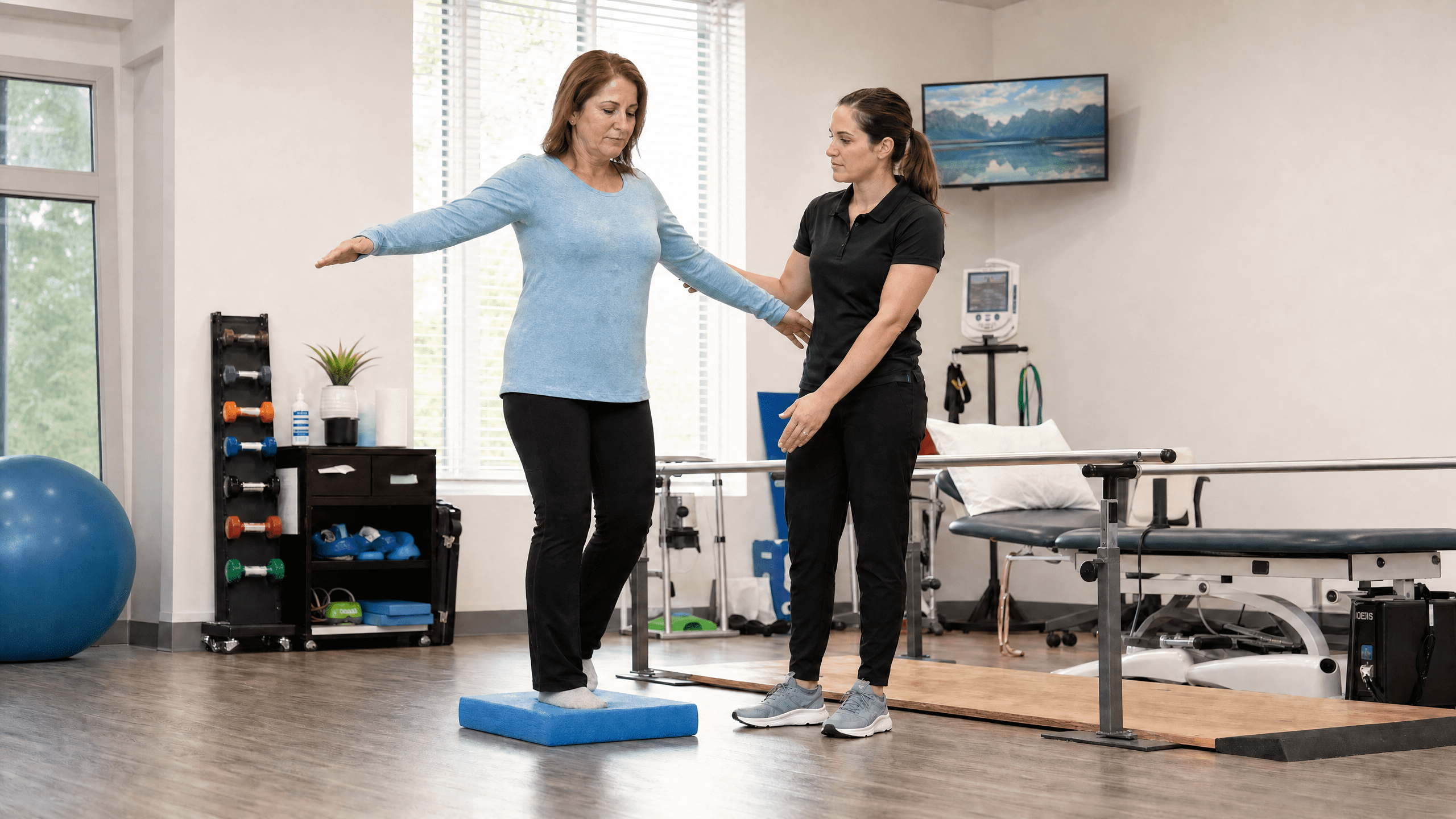
Balance exercises aim to improve your steadiness so you can perform daily activities safely. Your therapist may have you practice standing on uneven surfaces, walking with your eyes closed, or performing tasks that challenge your equilibrium. These exercises strengthen your muscles and improve your body’s ability to rely on visual and sensory cues for balance.
4. Canalith Repositioning Maneuvers
For patients with BPPV, specific head and body movements—such as the Epley maneuver—are used to guide the displaced calcium crystals back to their proper location in the inner ear. This treatment is highly effective, often resolving BPPV symptoms in just one or two sessions.
The Benefits and Outcomes of VRT
The primary goal of vestibular rehabilitation is to reduce your symptoms and improve your quality of life. Clinical studies consistently show that VRT is highly effective. For example, research indicates that up to 90% of patients with BPPV experience complete resolution of symptoms after just a few sessions of canalith repositioning. For other vestibular disorders, VRT has been shown to significantly reduce dizziness, improve postural stability, and decrease the risk of falls.
Beyond symptom relief, VRT offers several key benefits:
- Fall Prevention: By improving your balance and coordination, VRT significantly reduces your risk of falling, which is especially important for older adults.
- Increased Independence: As your dizziness subsides, you will feel more confident navigating your environment, allowing you to return to work, hobbies, and daily activities.
- Reduced Anxiety: Chronic dizziness can be incredibly anxiety-inducing. Understanding your condition and actively working to improve it can alleviate the fear associated with vestibular disorders.
Take the First Step Toward Better Balance
Living with a vestibular disorder can be challenging, but you do not have to navigate it alone. If you are experiencing dizziness, vertigo, or balance issues, the specialized team at Onesource Sports Neuro Rehab is here to help. We proudly serve patients throughout Georgia, including Lawrenceville, Tucker, Snellville, Newnan, Loganville, and Atlanta.
Do not let dizziness dictate your life. Contact Onesource today to schedule a comprehensive vestibular evaluation and take the first step toward finding your balance again.