
Meniscus tear physical therapy in Lawrenceville, GA can be a meaningful first step for many people with knee pain, especially when the tear is stable, symptoms are not causing the knee to lock, and a clinician has determined that immediate surgery is not needed. A meniscus tear is not one-size-fits-all: its pattern, location, cause, and the rest of the knee all influence the right plan. At Onesource Sports Neuro Rehab, rehabilitation focuses on restoring comfortable movement, strength, and confidence while keeping the plan aligned with your medical evaluation.
What a Meniscus Tear Means for Your Knee
The menisci are two C-shaped pieces of cartilage that help distribute load between the thighbone and shinbone. A tear can happen after a twist or pivot, particularly in sports, or can develop gradually as tissue changes with age. Symptoms may include pain along the joint line, swelling, stiffness, catching, reduced motion, or difficulty squatting and turning. Those symptoms can overlap with other knee problems, so a precise diagnosis matters more than trying to label every knee pain as a “torn meniscus.”
For an acute isolated tear, the American Academy of Orthopaedic Surgeons (AAOS) identifies MRI as the preferred imaging test when imaging is needed and notes that a physical examination can be informative when several tests are used together.1 The same guideline is specifically for acute isolated injuries; it does not cover every chronic or degenerative tear or tears occurring with an ACL injury. That distinction is important because a physical therapist and referring clinician should tailor the plan to the person in front of them, not to a scan result alone.
When a Non-Surgical Rehabilitation Plan May Be Reasonable
Not every meniscus tear needs an operation. A non-surgical plan may be considered after an appropriate evaluation when symptoms are manageable, the knee is not truly locked, the tear appears non-displaced or degenerative, and daily function can be improved through progressive rehabilitation. AAOS states, as clinical opinion, that rehabilitation may benefit people with an acute non-displaced isolated tear that is not amenable to repair, as well as people recovering after meniscal surgery.1
“Without surgery” should never mean “without assessment.” A traumatic tear in an active person can sometimes be repairable, and preserving functional meniscal tissue is a key goal when surgery is indicated. A knee that gets stuck and cannot fully straighten, substantial swelling after an injury, marked instability, inability to bear weight, or increasing redness, warmth, fever, or pain deserves prompt medical attention. Those symptoms help a clinician decide whether orthopedic evaluation should come before or alongside rehabilitation.
What the Evidence Says About Exercise and Surgery
For adults with degenerative meniscal tears, exercise-based care has strong long-term support. In the five-year ESCAPE randomized trial, 321 adults with degenerative tears improved by 25.1 points in knee function with exercise-based physical therapy and by 29.6 points after arthroscopic partial meniscectomy. The 3.5-point difference remained within the study’s prespecified noninferiority margin, meaning exercise-based physical therapy was not inferior to surgery for patient-reported knee function in that trial population.2
A newer 2025 randomized trial also highlights the value of following through at home. Among 879 adults ages 45 to 85 with knee pain, osteoarthritis, and a degenerative meniscal tear, adding standard supervised physical therapy to a three-month home-exercise program did not reduce pain more than home exercise alone at three months.3 This does not mean professional guidance has no place. It means the exercise plan, consistency, and fit with a patient’s goals matter. A therapist can help select and progress movement safely, correct technique, identify barriers, and connect the home program to work, stairs, walking, or sport.
| Clinical picture | What the care team considers | Common next step |
|---|---|---|
| Stable or degenerative symptoms without locking | Pain, motion, strength, swelling, daily demands, and response to activity modification. | A progressive rehabilitation and home-exercise plan may be appropriate after evaluation. |
| Acute twist with a locked knee or major loss of motion | Whether a displaced or repairable tear needs timely orthopedic assessment. | Prompt medical or orthopedic evaluation; rehabilitation may be integrated into the plan. |
| After meniscal surgery | Procedure, surgeon precautions, healing phase, range of motion, and return-to-activity goals. | Structured rehabilitation coordinated with the surgeon’s protocol. |
What Meniscus Tear Physical Therapy Looks Like
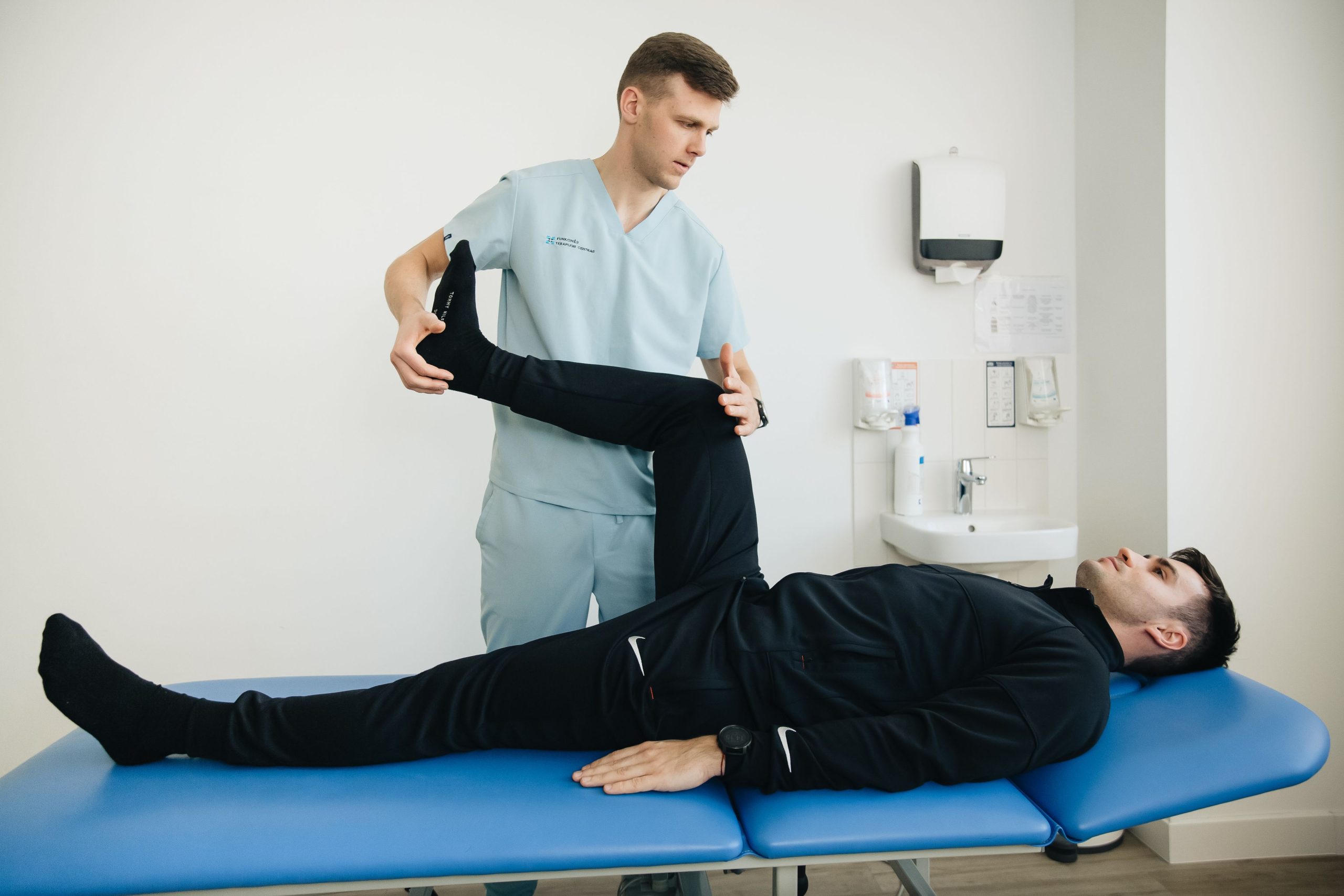
Rehabilitation begins with an evaluation of how the knee moves, tolerates load, and supports the activities that matter to you. Early care may focus on calming irritability, restoring comfortable motion, and finding ways to stay active without repeatedly provoking symptoms. As the knee tolerates more, a plan may build strength in the quadriceps, hamstrings, hips, and calf; improve balance and movement control; and gradually reintroduce tasks such as stair climbing, kneeling, lifting, running, or directional changes.
The pace is individual. A runner returning to cutting drills has different demands than a warehouse worker who kneels and carries, or an adult whose main goal is walking the neighborhood without pain. A guided plan is also useful when a meniscal tear appears alongside arthritis, hip weakness, or a prior injury. For athletes managing more than one knee concern, Onesource also offers education on criteria-based ACL rehabilitation and return-to-activity planning.
Choosing Between Rehabilitation and Surgery Is a Shared Decision
Rehabilitation and surgery are not opposing teams. The decision depends on the type of tear, mechanical symptoms, injury mechanism, age, activity goals, imaging, response to conservative care, and whether the clinician believes the tissue is repairable. In appropriate degenerative-tear populations, the research supports starting with exercise-based care rather than assuming arthroscopy is automatically the best first move.2 In contrast, certain traumatic or displaced tears may need a prompt surgical opinion to protect the knee and preserve tissue when possible.
A good evaluation gives you a plan and clear checkpoints: which activities to modify temporarily, what progress should look like, when to advance exercise, and when to re-contact the referring provider. It also avoids a false promise that any single exercise, brace, or passive treatment can “fix” every meniscus tear. The goal is durable function and an informed decision that fits your knee and your life.
Meniscus Tear Rehabilitation in Lawrenceville, Snellville, and Loganville
People searching for meniscus tear physical therapy in Lawrenceville, GA deserve care that considers both the diagnosis and the practical demands of daily life. Onesource Sports Neuro Rehab provides individualized meniscus tear rehabilitation for patients in Lawrenceville, Snellville, Loganville, Newnan, Tucker, and the greater Atlanta area. Your program can be coordinated with your physician or orthopedic team and adjusted as pain, mobility, and activity tolerance change.
If knee pain, swelling, catching, or reduced confidence is limiting your work, exercise, or time with family, contact Onesource Sports Neuro Rehab today to book an evaluation. Together, we can clarify the next step and build a rehabilitation plan that supports safer, stronger movement.
References
- American Academy of Orthopaedic Surgeons. (2024). Management of Acute Isolated Meniscal Pathology Evidence-Based Clinical Practice Guideline. https://www.aaos.org/globalassets/quality-and-practice-resources/acute-meniscal-pathology/amp-cpg.pdf
- Noorduyn, J. C. A., et al. (2022). Effect of Physical Therapy vs Arthroscopic Partial Meniscectomy in People With Degenerative Meniscal Tears: Five-Year Follow-up of the ESCAPE Randomized Clinical Trial. JAMA Network Open, 5(7), e2220394. https://doi.org/10.1001/jamanetworkopen.2022.20394
- Katz, J. N., et al. (2025). A Randomized Trial of Physical Therapy for Meniscal Tear and Knee Pain. New England Journal of Medicine, 393(17), 1694–1703. https://doi.org/10.1056/NEJMoa2503385